
Stainless Steel Bar Range
Browse bar grades, shapes, processing routes, documents and export supply options.
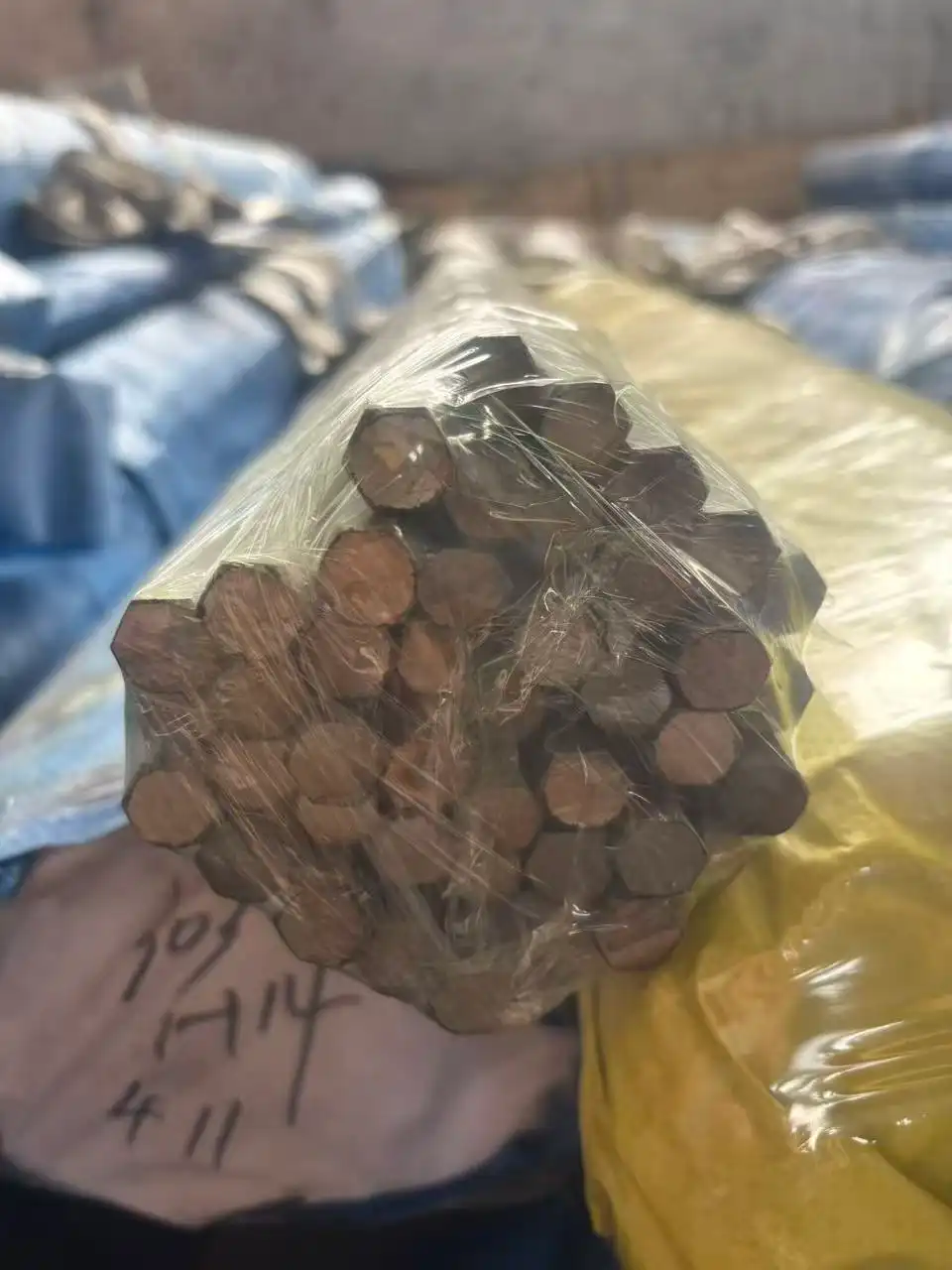
FX Stainless Steel supplies 303, 304, 304L, 316 and 316L stainless steel hex bar for machined nuts, couplings, valve parts and connector bodies. Buyers can order by metric or inch across-flats size, tolerance, surface and cut length. Send the drawing, grade wording, quantity, MTC needs and destination so we can check stock, processing and export packing.
Common grade families
Typical across-flats range
Stock and processed supply
Batch traceability
Hex bar makes sense when the finished component keeps wrench flats or a hexagonal outside profile. If the specified across-flats size is close to the finished part, it can reduce profile milling compared with round bar. Before ordering, state whether the drawing dimension is across flats or across corners, then add the grade, tolerance, surface, bar length or cut-piece length, quantity and MTC requirement.
Browse bar grades, shapes, processing routes, documents and export supply options.
Use the 303 route when chip control and machining speed are more important than the corrosion margin of 304 or 316.
Compare general-purpose 304 and low-carbon 304L wording for routine industrial parts.
Check molybdenum, low-carbon wording and MTC requirements for chloride-sensitive or project-controlled parts.
| Order Item | Supply Route | What to State in the RFQ |
|---|---|---|
| Grades | 303 / SUS303; 304 / 304L / SUS304; 316 / 316L / SUS316L | Keep the grade and standard wording used by the drawing or PO |
| Standards | ASTM A276; ASTM A479 or ASME SA479 when specified; JIS G4303; EN 10088-3 | Name the exact standard only when the project requires it |
| Across-flats size | Typical metric range S5 - S75 mm; inch sizes by inquiry | State AF/S size and do not substitute an across-corners dimension |
| Surface | Cold drawn, bright, polished and other agreed supply conditions | Match the starting surface to CNC feeding, machining allowance and appearance |
| Length | Full bars or cut-to-length pieces | Give length, length tolerance, pieces or total weight, and deburring needs |
| Documents | MTC, Heat Number, bundle labels and packing list; PMI/XRF when agreed | State traceability and inspection requirements before quotation |
Estimate weight from grade, across-flats size, length and quantity, then send the final specification for quotation.
Hex stock starts close to the finished outside profile. AF tolerance and corner condition matter before threading or final machining.
Parts that need wrench flats may require less profile milling when the selected hex size leaves a controlled finishing allowance.
Grade wording, MTC traceability and cut-piece identification become more important when the part belongs to a documented project.
Straightness, twist, ends and bundle consistency affect feeding. 303 may improve chip control, while 304 or 316 is chosen for different corrosion and document needs.
Most hex-bar quotations use S size or AF, measured between two opposite flat faces. Across corners is a larger diagonal measurement and should not be used as a substitute. A drawing that says only “20 mm hex” needs clarification before the material is cut.
| Dimension Point | What It Means | Buyer Check |
|---|---|---|
| Across flats (AF / S) | Distance between two opposite flat faces | Use this as the primary hex-bar order size |
| Across corners | Maximum diagonal distance between opposite corners | Do not treat it as the AF size |
| AF tolerance | Permitted variation in the controlling size | Use the drawing or accepted product standard instead of assuming h9/h11 applies |
| Corner condition | Sharpness, radius or slight rounding at the six corners | State the functional limit if the part keeps the original corners |
| Length | Full bar length or finished cut-piece length | Add length tolerance, squareness and burr requirement for cut pieces |
Tolerance classes commonly used for round diameters do not automatically define hex-bar across-flats tolerance. The accepted drawing or product standard controls the order.
Select the grade from the final part, machining method, exposure and document requirement. A grade that machines faster is not automatically the best corrosion choice, and an L-grade should not be assumed without MTC support.
| Grade Route | Typical Purchasing Reason | Important Boundary |
|---|---|---|
| 303 stainless steel hex bar / SUS303 | Repeated CNC work where chip breaking and machining speed matter | Added sulfur improves machinability but reduces corrosion and welding suitability compared with 304 |
| 304 stainless steel hex bar / SUS304 | General fasteners, fittings, connectors and industrial parts | It is a general-purpose grade, not a guarantee for chloride or coastal exposure |
| 304L stainless steel hex bar | Low-carbon wording for welded or specification-controlled parts | Accept 304/304L dual certification only when the actual MTC supports both designations. Do not treat standard 304 stock as 304L unless the PO and MTC support the low-carbon grade. |
| 316 stainless steel hex bar / SUS316 | Molybdenum-bearing route for higher chloride or chemical exposure than 304 | Actual service conditions still control corrosion suitability |
| 316L stainless steel hex bar / SUS316L | Low-carbon molybdenum-bearing route when welding or project wording requires it | Warm seawater, severe crevices or strong chemicals may require another material route |
Cold-drawn or bright hex bar is commonly used where a cleaner surface and closer dimensional control help bar feeding or final machining. Polishing may improve appearance but does not replace dimensional inspection. If the original hex profile remains on the part, allow enough material for cleanup without selecting an oversized bar that removes the machining advantage.
Compare the finished AF dimension with the stock size, corner requirement and expected cleanup before choosing the starting bar.
Long bars need suitable straightness, controlled twist and usable ends. Send the feeder and bar-length limits when they matter.
Specify cut length, tolerance, end squareness, burr condition and piece identification for blanks that go directly to machining.
Hex bar can meet the requested grade and still create production problems if AF size, twist, ends or labels are wrong. The inspection scope should follow the agreed drawing and order.
| Check Point | What to Inspect | Why It Matters |
|---|---|---|
| Across-flats size | Measure opposing flats at agreed positions | Controls stock allowance and finished profile |
| Straightness and twist | Check the bar against the agreed method and length | Excessive variation can affect bar feeding, clamping and machining |
| Corner and surface | Look for corner damage, dents, scratches and inconsistent finish | Original hex surfaces may remain visible on the final part |
| Ends and cut length | Check length, squareness, burrs and deformation | Poor ends can interrupt feeding or require extra facing |
| Bundle consistency | Match grade, AF size, length and quantity within each bundle | Mixed material or sizes create receiving and production risk |
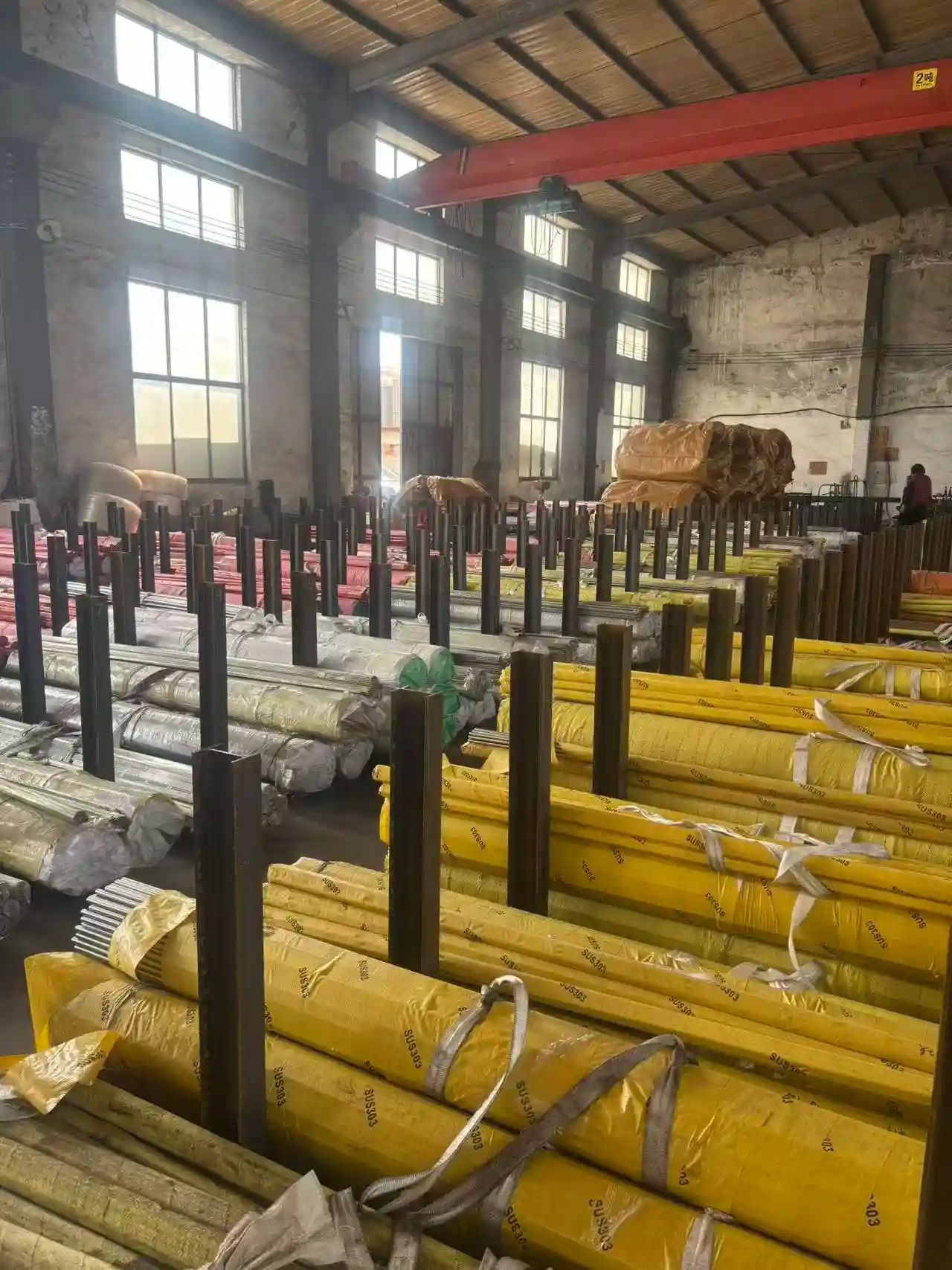
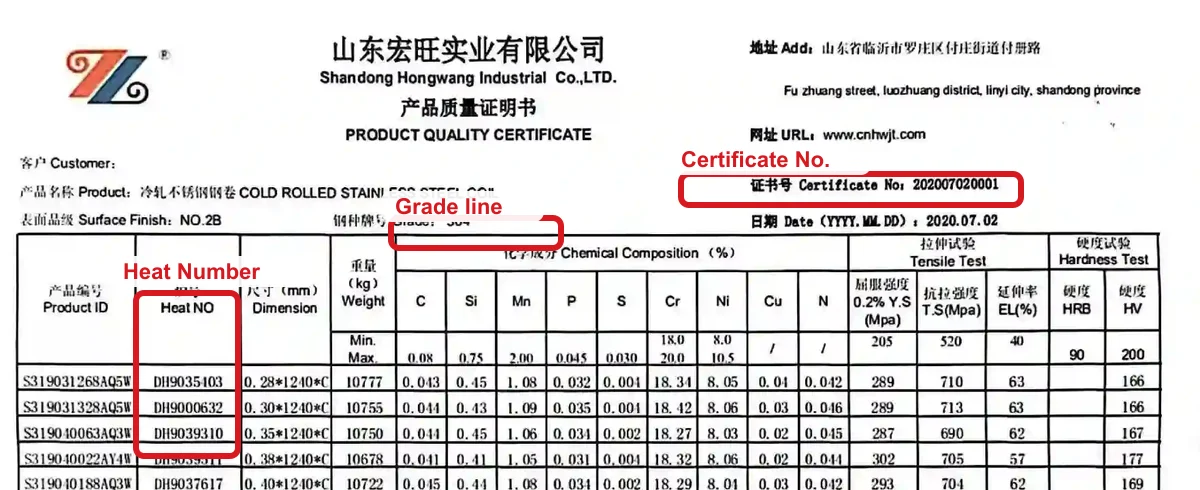
The MTC should carry the agreed grade and standard wording, chemical results and Heat Number. That Heat Number should match the bundle label and packing list. For cut pieces, agree how batch identity will remain visible after full bars are divided.
Read the sulfur value and full grade chemistry when machinability is the reason for selecting 303.
Check the carbon value and stated grade rather than assuming all stock carries an L-grade or dual certification.
PMI/XRF or third-party inspection can be arranged when the method, sampling and acceptance basis are agreed before the order.
The packing plan changes with bar length, cut-piece size and destination. Long bars need controlled bundle weight and lifting points, while short blanks need secure containment and clear batch identification.
| Supply Form | Packing Focus | Information to Confirm |
|---|---|---|
| Full-length bars | Strong bundles, protected ends, lifting and moisture control | Bar length, bundle weight limit and unloading method |
| Cut-to-length pieces | Contained boxes or bundles, piece count and batch separation | Piece dimensions, quantity, deburring and label format |
| Mixed sizes | Separate labels and visible AF-size identification | Packing list order and whether sizes may share one package |
| Sea freight | Waterproof wrapping, clear shipping marks and document coordination | Destination port, container plan and any wooden packing requirement |
A complete RFQ lets us separate selected stock sizes from material that needs cutting, polishing or special inspection.
| RFQ Field | Example | Why It Changes the Quote |
|---|---|---|
| Grade and standard | 303 ASTM A276, or SUS304 JIS G4303 | Controls material and certificate wording |
| Across-flats size | AF 20 mm or 3/4 inch across flats | Identifies the actual hex-bar stock size |
| Tolerance and corners | Drawing tolerance; original corners remain on the part | Defines dimensional inspection and starting allowance |
| Surface and length | Cold drawn, 3 m bars; or 85 mm cut blanks | Determines processing, ends and packing |
| Quantity | 500 kg trial order or 2,000 pieces | Affects stock allocation, cutting and package size |
| Documents and destination | MTC and Heat Number labels; Port Klang, Malaysia | Sets traceability, export packing and shipping marks |
A complete hex-bar order combines AF size with grade, process route, tolerance, standard and traceability.
Estimate theoretical weight from across-flats size, grade, length and quantity.
Compare starting geometry, machining waste, clamping and typical part shapes.
See when the hexagonal starting profile can reduce extra milling in repeat production.
Match grade wording, chemistry, Heat Number, labels and packing list before cargo release.
Use round bar when the final part is turned to a cylindrical outside profile.
Use square bar for blocks, brackets and parts controlled by side size rather than AF.
Across flats, often written AF or S size, is the distance between two opposite flat faces. It is normally the controlling hex-bar order dimension and is different from the larger across-corners measurement.
303 is often selected for faster machining and chip breaking. 304 is a general-purpose route, while 316 or 316L is considered when the service environment or project documents require a molybdenum-bearing grade. The final choice depends on machining, corrosion, welding and certificate requirements.
Yes, when the actual heat chemistry, MTC and stated standard support both grade designations. Dual certification is batch-specific and should not be assumed for every L-grade stock item.
Yes. Send the cut length, length tolerance, piece quantity, end condition and packing requirement. Availability depends on grade, AF size, surface, cutting route and current stock.
MTC and Heat Number traceability are available for confirmed batches. The certificate, bundle label and packing list should identify the same material batch before shipment release.
Yes, for selected stock grades and AF sizes. MOQ from 100kg depends on surface, cut length, packing and current availability; it does not apply to every special size or production route.
Share the grade, standard, AF size, tolerance, corner requirement, surface, length, quantity, MTC needs and destination. We will check stock availability, cutting, batch documents and export packing.
Contact FX Stainless Steel