Lock the grade and document wording
State 316L, ASTM A240 316L, SUS316L, EN 1.4404 or UNS S31603 exactly as required on the PO, MTC and labels.
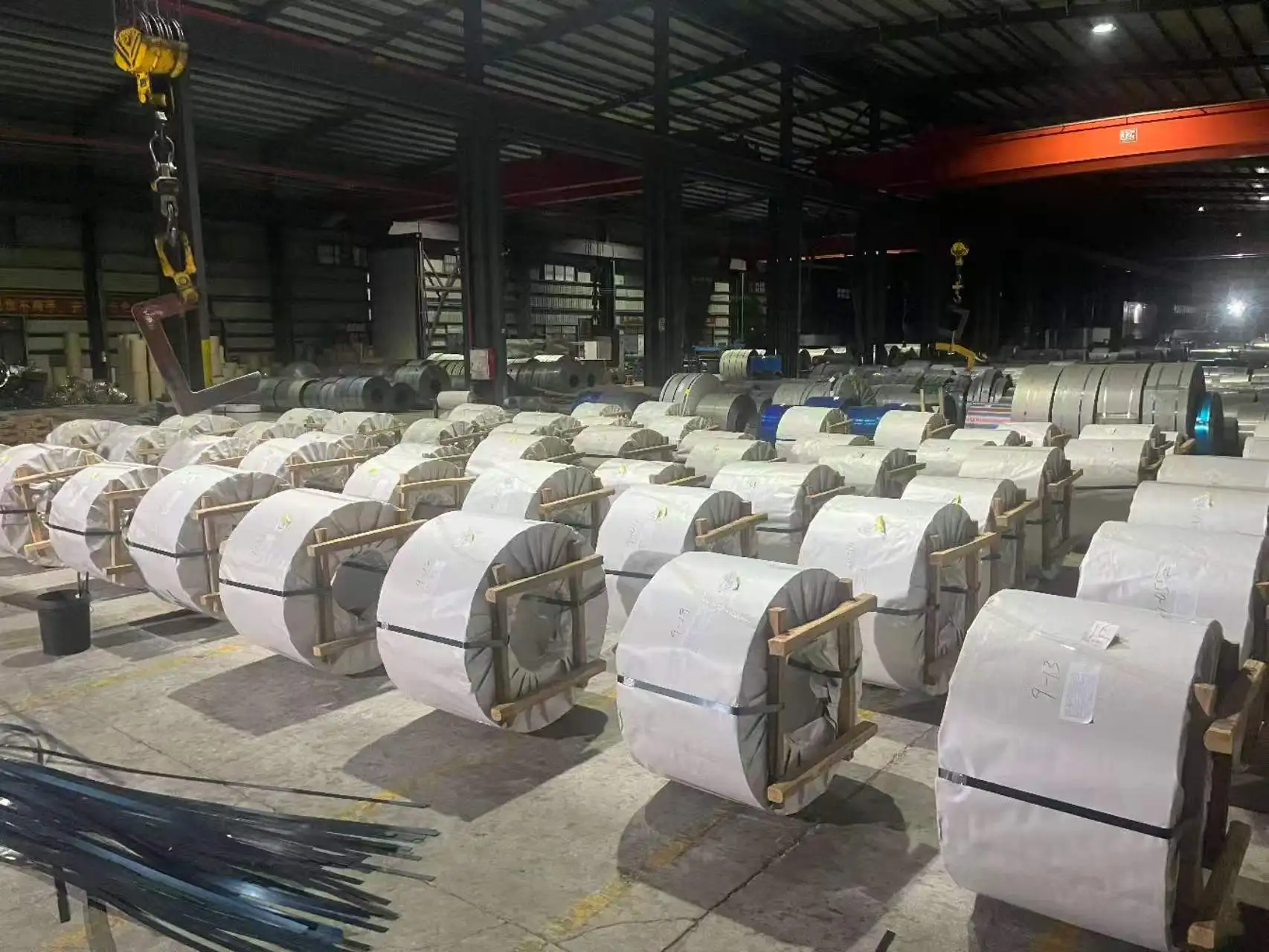
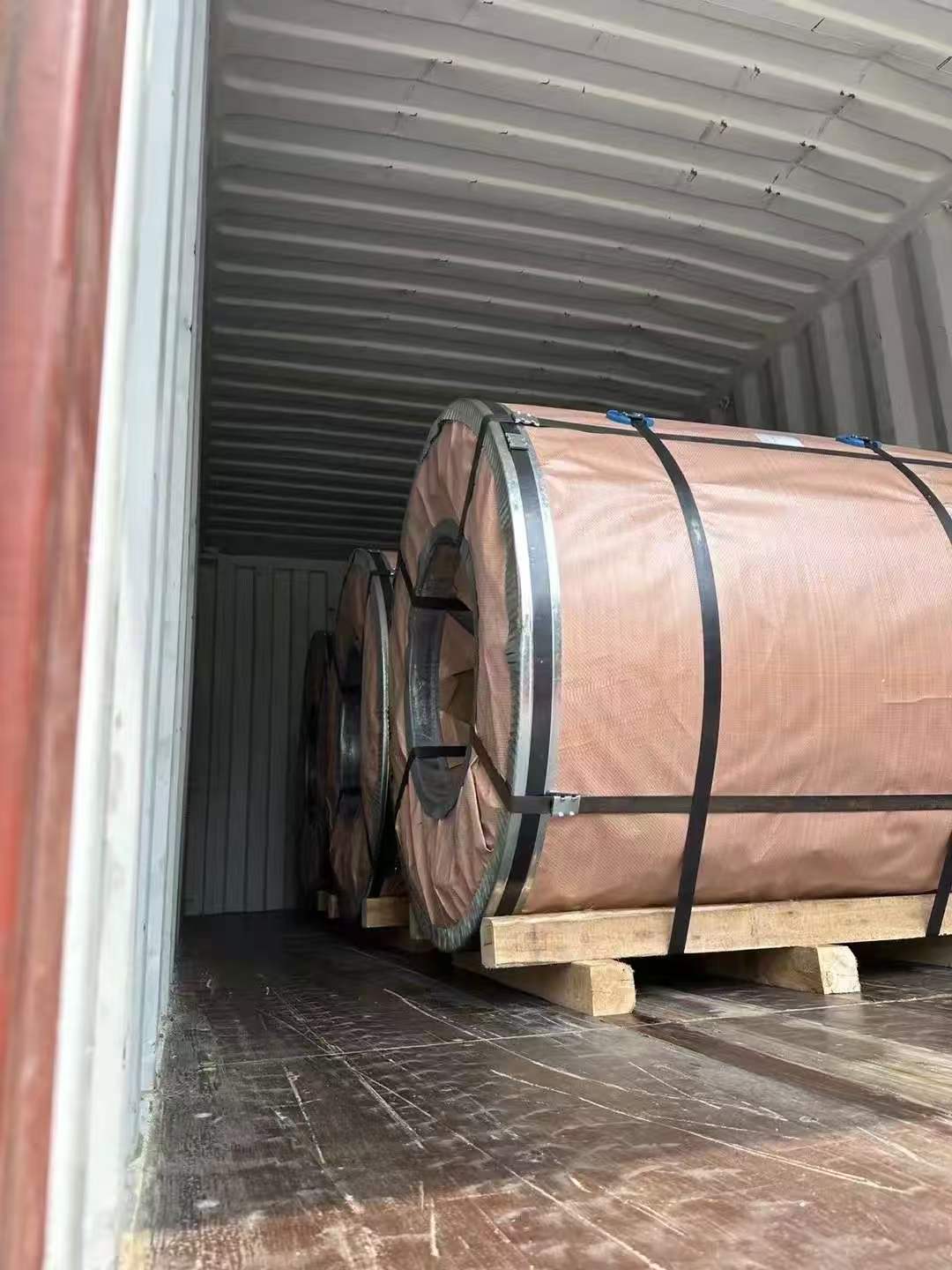
FX Stainless Steel is a China-based 316L stainless steel coil supplier for buyers in Southeast Asia, the Middle East and other export markets. We handle master coil, slit coil and cut-to-length requirements. Send the grade wording, thickness, width, surface, coil ID, coil weight, edge condition, quantity, MTC needs and destination so we can check the supply route, slitting and packing.
Common grade names
Common flat product standard
Key grade checks
Edge condition options
State 316L, ASTM A240 316L, SUS316L, EN 1.4404 or UNS S31603 exactly as required on the PO, MTC and labels.
Master coil, slit coil and cut-to-length sheet need different width tolerances, edge conditions, burr limits, coil weights and packing methods.
316L offers more chloride resistance than 304 in many applications, but temperature, crevices, cleaning chemicals and drainage still affect material selection.
The molybdenum in 316L gives buyers more corrosion margin than 304 for many coastal, humid and mild chemical environments. Common orders include equipment skins, cabinets, formed panels and slit coil for production lines. The final grade still depends on temperature, chemical concentration, cleaning method and equipment design.
Coastal equipment covers, chemical plant panels, food processing sheet work, appliance parts, mild chloride-risk fabrication and slit coil programs.
Send grade, standard, thickness, width, coil ID, coil weight, surface finish, edge condition, slitting tolerance, MTC request and destination.
Warm seawater, strong reducing acids and severe crevice conditions may require duplex, super duplex, another alloy or a design change specified by the project engineer.
| Item | Order Requirement | Buyer Note |
|---|---|---|
| Grade names | 316L / SUS316L / EN 1.4404 / UNS S31603 | Keep drawing, PO, MTC, labels and import documents aligned when grade wording matters |
| Standards | ASTM A240 / JIS G4305 / EN 10088 / GB/T | Put the required standard on the PO when it must also appear on the MTC and labels |
| Chemistry checks | C, Cr, Ni and Mo values on MTC | Do not only read the grade name; actual molybdenum and low carbon values are important checks |
| Thickness and width | Cold rolled thickness / master width / final slit width | Availability depends on current source coil, slitting plan, minimum workable width and order quantity |
| Coil condition | Coil ID / coil weight / mill edge / slit edge / deburred edge | Confirm inner diameter, maximum coil weight and edge condition before production |
| Surface | 2B / BA / No.4 / HL / mirror | For visible parts, define protective film, grain direction and the agreed appearance check |
Use the plate weight calculator when the coil will be leveled and cut into specified sheet sizes.
Buyers specify 316L coil for coastal covers, cabinets, enclosures and panels when salt air or humid service calls for more corrosion margin than 304.
Equipment skins, covers, tanks and formed parts use 316L sheet or slit coil when the cleaning method and process exposure justify the grade.
Selected chemical handling, water treatment and utility equipment panels use molybdenum-bearing 316L when the specified service conditions suit the grade.
Slitting support helps buyers match 316L coil width, edge quality and packing with bending, roll forming, stamping or batch fabrication lines.
316 and 316L are closely related grades, but the lower carbon limit matters when the drawing, welding procedure or project documents call for 316L. Put the accepted grade wording on the PO before comparing quotations.
| Grade | Typical Carbon Limit | Common Buying Point | Buyer Note |
|---|---|---|---|
| 316 | <= 0.08% C | General 316 stainless flat product route | May be acceptable when the drawing or project specification does not require low-carbon wording |
| 316L | <= 0.03% C | Low-carbon grade for welding and fabrication requirements | Useful when PO, MTC, welded assembly or project documents require 316L wording |
| Dual-certified 316/316L | Must satisfy the agreed standard and chemistry | Can simplify inventory when the chemistry and document wording meet both sides | Confirm whether the buyer accepts dual certification before shipment |
316L improves pitting resistance over 304 in many chloride-bearing environments, but it does not solve every corrosion problem. Warm seawater, stagnant chloride pockets, strong reducing acids, high temperature, crevices and poor drainage can still cause failure. A project engineer should then specify a design change or higher-alloy material instead of relying on thicker 316L coil.
Duplex stainless steel is one possible route when the project needs higher chloride resistance and strength.
More severe chloride, acid or temperature conditions may require super duplex or another alloy specified by the project engineer.
Crevices, stagnant water, poor cleaning access and sharp edges can matter as much as grade selection.
For slit coil orders, disputes often start with edge and shape details rather than grade chemistry. Put the measurement method and acceptance basis on the PO before production.
| Check Item | What to Confirm | Why It Matters |
|---|---|---|
| Burr height | Expected burr level after slitting | Excessive burr can affect feeding, bending, safety and downstream assembly |
| Camber / side bow | Side bow tolerance for the slit width | Poor straightness can disturb automated feeding and roll forming |
| Edge wave | Wave or deformation near the slit edge | Edge wave can cause poor fit, unstable processing or visual rejection |
| Coil shape | Telescope, collapsed coil, loose winding or uneven tension | Bad coil shape creates handling risk and production line stoppage |
| Surface scratches | Scratch, rub mark, oil stain and protective film condition | Visible 316L coil may still be rejected even when chemistry is correct |
| Labels and heat number | Grade, size, heat number, slit coil number and packing list alignment | Supports receiving inspection and traceability after slitting |
316L coil price can change when the order needs visible finish, protective film, special edge handling or narrow-width slitting. Keep these items separate in the RFQ.
| Requirement | Common Options | Buyer Note |
|---|---|---|
| Surface finish | 2B / BA / No.4 / HL / mirror | 2B is common for cold rolled coil; decorative or visible work needs clearer appearance wording |
| Protective film | No film / single-side film / laser film | Film choice affects visible surface protection, handling and later adhesive risk |
| Edge condition | Mill edge / slit edge / deburred / rounded edge | Deburred or rounded edges may be useful for safer handling or downstream forming |
| Grain direction | No.4 or HL direction by length or width | Directional finish must match the final panel layout |
| Packing | Coil eye, pallet, anti-moisture wrap, labels | Packing should match coil ID, coil weight, shipping route and receiving method |
Example: ASTM A240 316L stainless steel coil, 0.8 mm thickness, 1219 mm width, 2B surface, coil ID 508 mm, about 5 MT per coil, slit to 300 mm width, deburred edge if available, MTC required, destination Laem Chabang. This wording lets us check the source coil, slitting setup, edge finishing, packing and document needs before quotation.
State 316L, SUS316L, ASTM A240 316L, EN 1.4404, UNS S31603 or the exact drawing requirement.
Send thickness, width, coil ID, coil weight, edge condition, surface finish, protective film and slitting tolerance.
Add quantity, destination port, MTC requirement, packing request, inspection scope and target delivery timing.
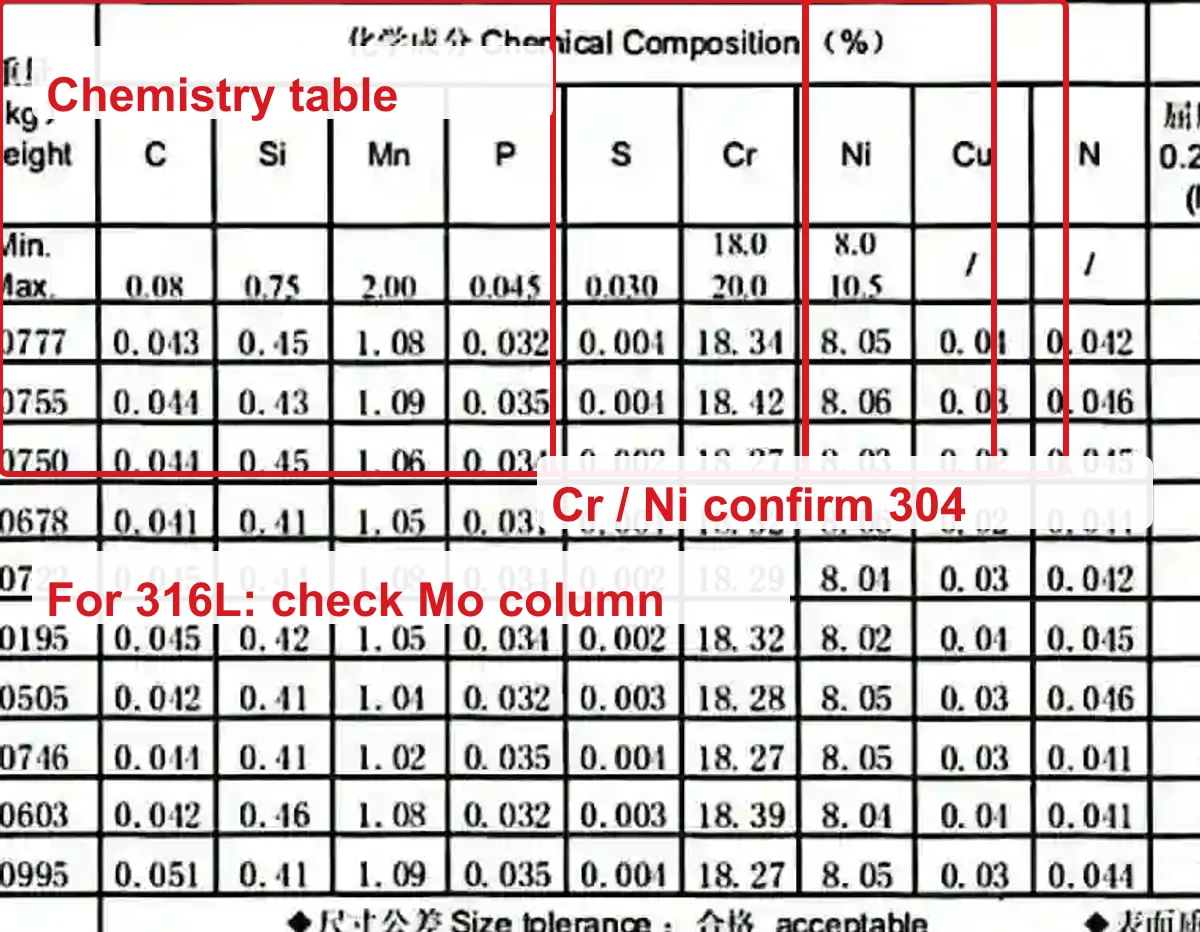
The grade name alone is not enough. Read the carbon, chromium, nickel and molybdenum values, then match the heat number and coil number across the MTC, slit-coil labels and packing list. Each slit coil should remain traceable to the original heat.
Compare C, Cr, Ni and Mo values with the required standard and buyer specification.
Match the heat number, coil number, slit-coil labels and packing list before shipment release.
State any surface, dimension, PMI or third-party inspection requirement on the PO before production.
See the broader coil range, finish choices, slitting support and export packing options.
Compare the 304 coil route when the application is indoor, controlled or less chloride-sensitive.
Compare grade selection, chloride exposure, welding, finish, slitting, edge condition and MTC checks before ordering.
See 316L pipe supply for welded and seamless project requirements, MTC, PMI and export packing.
Compare duplex plate when chloride exposure, strength or project life calls for a higher material route.
Compare 2B, BA, No.4, HL and mirror finish wording before confirming visible coil or sheet orders.
Learn how to check grade wording, heat number, chemistry and document details before shipment.
Send grade, thickness, width, surface, edge condition, coil ID, coil weight, quantity and destination for quotation.
316L stainless steel coil is used for coastal equipment covers, chemical plant panels, food processing sheet work, water treatment parts, marine-adjacent fabrication, slit-coil production and visible panels that need more corrosion margin than 304.
316L is the low-carbon version of 316. It is commonly specified when welding procedures, fabrication controls, MTC wording or project documents require the lower carbon limit. The MTC should show the actual carbon, chromium, nickel and molybdenum values.
316L may not be enough for warm seawater, strong reducing acids, severe crevices, high temperature or poor drainage. The project engineer should then compare duplex, super duplex, another alloy or a design change.
Send grade wording, standard, thickness, width, coil ID, coil weight, surface finish, edge condition, slitting width, burr or deburring expectation, quantity, destination and MTC requirement.
Yes. Custom-width slitting is available after we check thickness, final width, tolerance, edge condition, burr expectation, coil weight, quantity and packing. Very narrow or special-width coil needs a feasibility check before quotation.
Share whether you need ASTM A240 316L, SUS316L or EN 1.4404, plus thickness, width, coil ID, coil weight, surface finish, edge condition, slitting requirement, quantity, destination port and MTC request.
Contact Sales Team